
Is Going To Community College The Best Thing For Your Future?
Community college can be an affordable, flexible path toward a degree and career growth. The best choice depends on your goals, finances, and future plans.
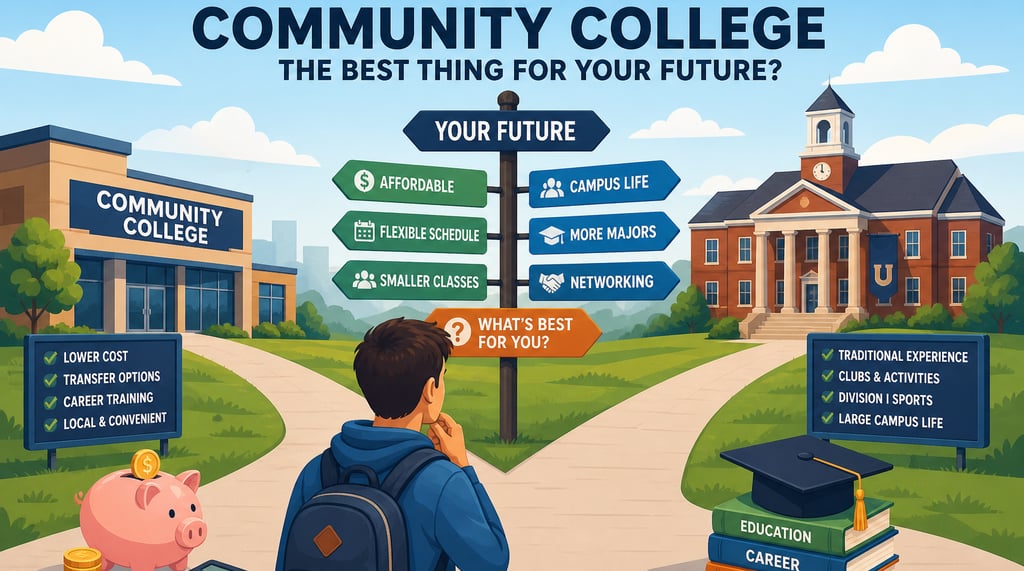
After high school, it might be challenging to know what to do. Some kids desire to attend to a major school with lots of people, football games, and dorm life. Some people desire a cheaper and more flexible choice that enables them go to school and work at the same time. Many people think that community college is a good compromise. It offers pros and cons that students should consider about carefully before signing up. For example, it gives them more chances, is simpler to get to, and costs less.
There is no one approach that works for everyone. Not every student can use the same solution. If you know the pros and cons of community college, you may pick the one that best fits your goals, finances, lifestyle, and future professional aspirations.
What does it mean to be a college in the community?
A community college is a two-year school that teaches people how to get jobs and grants certifications and associate degrees. Students can earn an Associate of Arts (AA), an Associate of Science (AS), or technical certificates in a number of fields. A lot of students later transfer their credits to a four-year college so they can acquire a bachelor's degree.
those who just graduated from high school, adults who work, parents who want to go back to school, and those who want to change jobs all like community colleges. One reason they are become more popular is that they are simple to use and can be changed to fit your needs.
What Are the Best Things About Community College?
One of the main reasons students select community college is because it doesn't cost much. Most of the time, tuition is a lot less than at institutions. This can make a major impact for students who are worried about how much money they owe.
The cost of college has gone up a lot over the years, and many students don't want to spend decades paying back loans. Students can start studying toward a degree at a community college without the same financial hardship as a four-year university.
In many circumstances, students can save money by living at home instead of paying for dorms, meal plans, and campus housing. Sometimes, even the cost of textbooks and fees for students is lower.
For families who are attempting to save money, community college can seem like a decent and sensible decision.
Plans that can change
You can also be flexible, which is a significant bonus. Community colleges generally understand that students have a lot going on outside of school. Many students have jobs, either full-time or part-time, while they are in school. Some people might have kids or other family responsibilities. This flexibility can help students who wouldn't be able to go to college otherwise do so.
For example, a person who works during the day may still be able to take classes at night and earn their degree over time. That kind of schedule isn't always easy to find at a conventional college.
There are fewer students in each class
Big institutions may put students in lecture halls with hundreds of other students. The classrooms at a community college are usually smaller and more personal.
When there are fewer students in a class, they can usually ask more questions, get more help, and get to know their teachers better. This can assist students who have problems in crowded classrooms feel better about themselves and achieve better in school. Some kids feel more comfortable speaking up in a smaller class where the lecturers know them by name.
Easier to Get Used to College Life
Not every kid is ready to attend to a big institution right after high school. Going to community college can help you get ready for adulthood and school life. Before they pick a major or career, students can work on their study skills, learn how to manage their time, and try out new disciplines.
This is really helpful for kids who aren't sure what they want to do with their lives yet. Instead of spending a lot of money on subjects they aren't sure about, they can attend general education classes for less money while they figure things out.
Options for Transfer
Many students attend community college to prepare for a bachelor's degree. They go to a university after two years to finish the balance of their classes. Some colleges even have deals with institutions that make things easier. This can help students achieve the same bachelor's degree as those who go to university, but it will cost them a lot less money. This approach is great for students who want to go to college but can't afford for four years of tuition all at once.
The Bad Things About Community College
There are a lot of excellent things about community college, but it's not for everyone. There are also some bad things that students should consider about honestly before choosing a choice. One of the largest differences between community schools and universities is how they live on campus.
Students at a regular university generally live in dorms, go to sports games, join clubs and student groups, and do other social things. Students can develop friends, learn to be more independent, and make memories that will last a lifetime through these experiences.
Community colleges don't have as many clubs and activities outside of class, and they don't feel as much like a "college" as other colleges do. Many students drive to class and then go home or to work, which can make campus life appear quieter and less social. Some folks are okay with this. Some folks might think they're losing out on a large portion of going to college.
Fewer Options for Degrees
Most of the time, community colleges provide programs that lead to an associate degree or a certification. A lot of beneficial programs are available, however they might not offer as many majors as a university. Students who desire to work in particularly specific sectors may still need to transfer to a four-year school. Some vocations require advanced classes and bachelor's degrees that community institutions cannot provide. This means that students should think about their long-term professional ambitions before they decide where to start.
Not many chances to meet new people
Internships, links with alumni, research programs, and partnerships with businesses are just some of the ways that colleges and universities can help you meet new people.
Students at a bigger university might find it simpler to get in touch with recruiters, travel to career fairs, and meet professors who know a lot of people in their field. Sometimes, these possibilities might assist students find jobs or internships when they finish school. Community colleges could still help you obtain a job, but the networking chances might not be as good, depending on the school and the curriculum.
It's not always easy to stay motivated
It's not always easy for students to stay motivated at community colleges because they are flexible and largely for people who drive to school. It's easier to put things off or lose concentration when you don't have the structure of dorm life or a busy campus.
Some students work and take care of their family while going to school part-time. This can make it take longer for them to get their degree. You frequently need to be able to manage your time and be disciplined to do well in community college. But if you really care about campus life, competitive sports, research possibilities, or being around a lot of people, you might want to attend to a four-year university straight away.
You can choose between going to a university or a community college. There is no single answer that works for everyone. Some students find that going to community college is an inexpensive and beneficial method to acquire a degree without having to borrow a lot of money. Some people might be better off with a traditional college experience since it fits their objectives, personality, and career aspirations better.
The most essential thing is to choose a course that will help you grow as a person, with your money, and in the future. There is no one right approach to do well in school or in life.
You can start at a community college or a university; it doesn't matter. The most essential thing is to keep learning, improving, and moving toward the future you want